Budget and prices
What a hair dryer actually costs you per use
Divide the price by the sessions you will get from it, add the electricity from the rated wattage, and a $400 dryer and a $120 one stop looking similar.
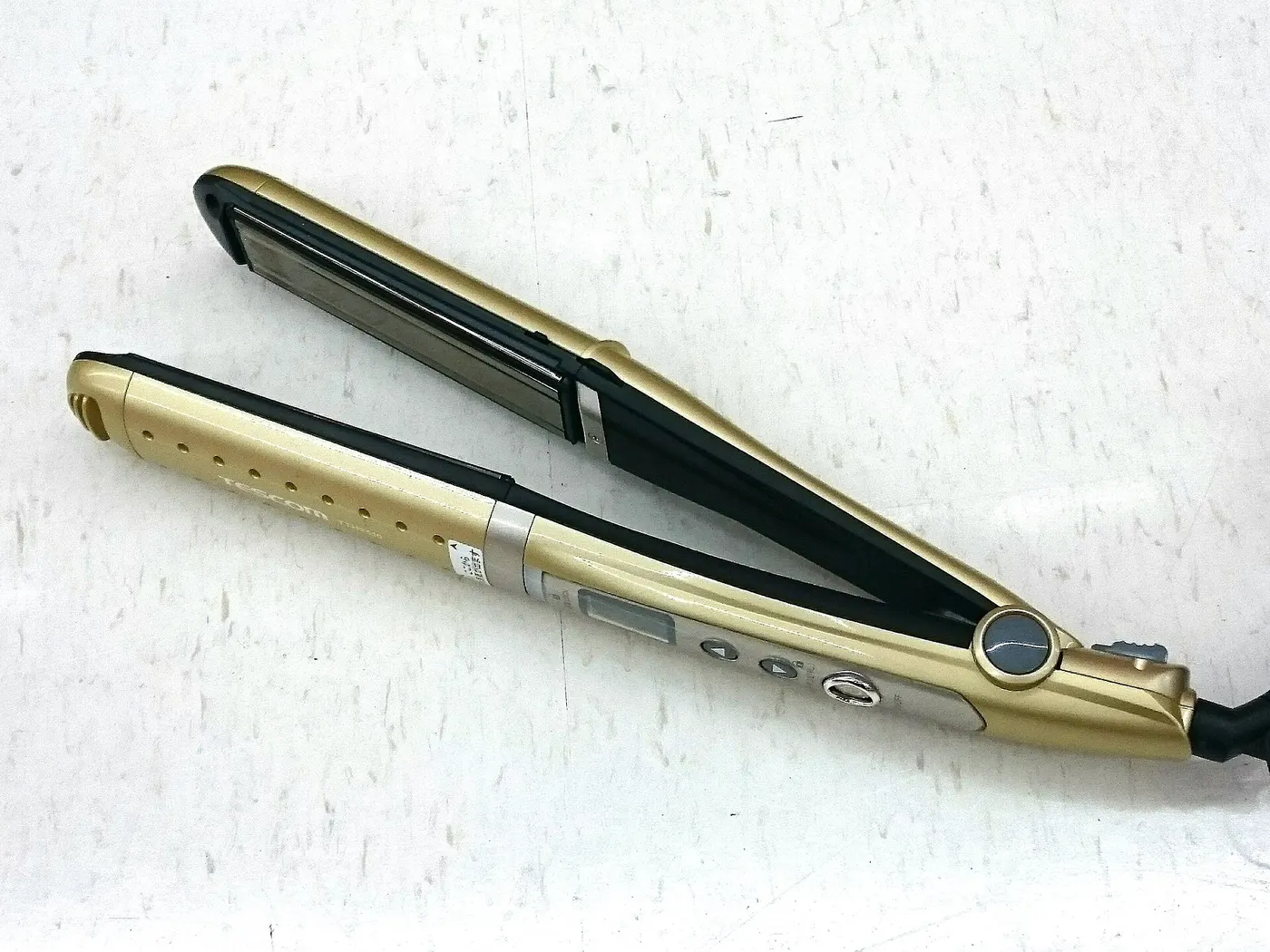
A styling tool is one of the few purchases where the per-use figure is easy to compute and almost never computed. You know roughly how often you dry your hair, you know how long a session takes, and the wattage is printed on the tool. Those three numbers give you the whole answer.
This guide does the division in public so you can substitute your own figures. Every price is a labelled example, because this site has no price feed; what is being shown is the method and the order of magnitude of each line.
Count the sessions before you look at the price
The denominator does more work than the numerator. Four sessions a week is 208 a year. Kept 5 years, that is 1,040 uses from one tool. Kept 2 years, it is 416. Those two numbers are what separate a sensible expensive purchase from a wasteful cheap one, and both are decided after the receipt rather than before it.
On that basis an example $120 dryer over 5 years is about 12 cents a session and an example $400 dryer is about 38 cents. The same $120 dryer discarded after 2 years is about 29 cents a session, which is closer to the expensive tool's figure than to its own. Longevity, not price, is the lever.
A straightener usually has a different rhythm. At 2 sessions a week, 104 a year, an example $90 iron kept 6 years covers 624 uses, which is about 14 cents a session. Count each tool separately rather than treating the drawer as one purchase.
| Example price | Kept 2 years (416 uses) | Kept 5 years (1,040 uses) | Kept 8 years (1,664 uses) |
|---|---|---|---|
| $60 | $0.14 | $0.06 | $0.04 |
| $120 | $0.29 | $0.12 | $0.07 |
| $400 | $0.96 | $0.38 | $0.24 |
Each cell is the example price divided by the number of uses, rounded to the cent. Electricity is not included here; the next section adds it.
Electricity, computed from the plate rather than guessed
The rated wattage printed on the tool is all you need. Watts multiplied by minutes, divided by 60,000, gives kilowatthours. A 1,800 W dryer run for 8 minutes uses 0.24 kWh, which at 18 cents per kilowatthour is about 4.3 cents. That rate is rounded from the 18.16 cents residential average the EIA published for August 2026.
Over a year at 208 sessions that is about 50 kWh and about $9. Drying every day instead, 365 sessions, is about 88 kWh and about $16. Those are small numbers next to the hardware line, and that is the useful finding: for a dryer, the purchase dominates the running cost at every realistic frequency.
A straightener inverts nothing but shrinks everything. A 60 W iron held for 12 minutes uses 0.012 kWh, about 0.2 cents a session, or roughly $0.22 a year at 2 sessions a week. Electricity is effectively a rounding error on an iron, which is why the plate temperature and the build quality are the only things worth paying for.
| Tool and pattern | Energy per session | Sessions per year | Electricity per year |
|---|---|---|---|
| 1,800 W dryer, 8 minutes, 4 times a week | 0.24 kWh | 208 | about $9 |
| 1,800 W dryer, 8 minutes, every day | 0.24 kWh | 365 | about $16 |
| 60 W iron, 12 minutes, twice a week | 0.012 kWh | 104 | about $0.22 |
Rated power is a maximum. A dryer used on medium heat draws less, so a plug-in meter will read below these figures rather than above them.
Putting hardware and electricity on the same line
Adding the two gives the number you actually want. An example $120 dryer kept 5 years at 4 sessions a week is about 12 cents of hardware and 4.3 cents of electricity, roughly 16 cents a session, or about $33 a year.
The same arithmetic on an example $400 dryer is about 38 cents of hardware and the same 4.3 cents of electricity, roughly 43 cents a session, or about $89 a year. The gap between the two tools is $56 a year, and all of it is the purchase price divided by the same number of uses.
That framing is what the cost-per-use calculator on this site is for. It takes a price, a frequency, a keeping period and a wattage, and it shows the two lines separately so you can see which one your decision is actually about. For dryers it is almost always the first line.
- $120 dryer, 5 years, 4 sessions a week: about 16 cents a session, about $33 a year
- $400 dryer, 5 years, 4 sessions a week: about 43 cents a session, about $89 a year
- $120 dryer discarded after 2 years: about 33 cents a session, which is most of the expensive tool's figure
- $90 iron, 6 years, 2 sessions a week: about 14 cents a session before electricity
- Electricity is about 4.3 cents a dryer session and about 0.2 cents an iron session
Repairability, warranty length and the figure they change
Since the keeping period dominates, the features that extend it are worth more than the features that improve a single session. A removable rear filter that you can clear of lint is the clearest example: a blocked filter makes a dryer run hot and slow, and it is the most common reason a working motor is thrown away.
A stated warranty period in years is the manufacturer's own estimate of the keeping period, and it is worth reading as such. A tool with a 1-year warranty and a $400 price is asking you to assume a keeping period that the maker will not underwrite, which moves the per-use figure in the direction of the 2-year column above.
Cord strain relief is the other quiet determinant. The cord fails where it leaves the handle, and a flexible moulded collar there is the difference between a tool that reaches year 5 and one that becomes intermittent in year 2. Both of these are visible before you buy, and neither appears in the advertising.

Before you buy
- Count how many sessions a week you really use the tool, then multiply by 52
- Decide a realistic keeping period in years and multiply to get total uses
- Divide the price you will pay, including sales tax, by that number of uses
- Read the rated wattage from the plate and time one real session in minutes
- Multiply watts by minutes, divide by 60,000, and multiply by your own rate per kWh
- Add the two figures to get a cost per session you can compare between tools
- Check for a removable filter, a stated warranty in years and a moulded cord collar before buying
Questions readers ask
- Is an expensive dryer ever justified by the per-use figure?
- It can be, but only through the keeping period. An example $400 dryer kept 8 years at 4 sessions a week is about 24 cents a session, which is closer to a $120 dryer kept 5 years at 12 cents than the ticket prices suggest. The case rests entirely on the tool still working in year 8, so repairability and warranty length are where to look.
- How much does drying my hair cost in electricity?
- About 4.3 cents a session for a 1,800 W dryer run 8 minutes, at 18 cents per kilowatthour. Across a year that is roughly $9 at 4 sessions a week or $16 every day. It is real money and it is far smaller than the purchase price spread over the same period.
- Does the wattage on the box tell me the real draw?
- It tells you the maximum. A dryer on a medium heat setting with the motor at half speed draws less, so a plug-in meter will read under the figures in this guide. Use the plate rating for comparing two tools and a meter for budgeting your own bill.
- Why is the straightener electricity so small?
- Because a flat iron heats two small plates rather than a stream of moving air. A 60 W iron held for 12 minutes uses 0.012 kWh, about 0.2 cents. At 2 sessions a week that is about $0.22 a year, which is why plate temperature control and build quality decide an iron purchase instead of running cost.
- Should I count the cost of attachments and replacements?
- Yes, in the hardware line. A diffuser or concentrator bought separately at an example $20 adds about 2 cents a session over 1,040 uses. The larger risk is that a replacement is not sold at all for a given model, which shortens the keeping period and moves every figure in the table.
Sources
- U.S. Energy Information Administration — Electric Power Monthly, average retail price of electricity to residential customers — checked 2026-11-03
- ENERGY STAR — Products: certified category list, confirming no efficiency label exists for hair dryers or straighteners — checked 2026-11-03
- U.S. Consumer Product Safety Commission — Hand-Supported Hair Dryers business guidance on required immersion protection — checked 2026-11-03
Some links on this site can earn us a commission. That does not change which product a guide recommends, and it adds nothing to your price. Advertising is not enabled on this site yet. When it is, ads will be labelled and kept visually separate from the guides.