Reactions and irritation
Heat, fumes and irritation: the three risks that have published numbers
Formaldehyde released from heated smoothing products, exposure limits in parts per million, and the plug device that exists because dryers end up in water.
Most writing about hair damage is adjectives. Three of the risks attached to styling tools and treatments do have published numbers behind them, from the FDA, from OSHA and from the Consumer Product Safety Commission, and those three are worth knowing precisely because you can act on them.
This guide covers what happens when a smoothing solution meets a hot iron, what the exposure figures actually are, and why the plug on a hair dryer looks the way it does. It is about published limits and labels rather than about any product we have tested, because this site tests nothing.
Heat is what releases the formaldehyde, not the bottle
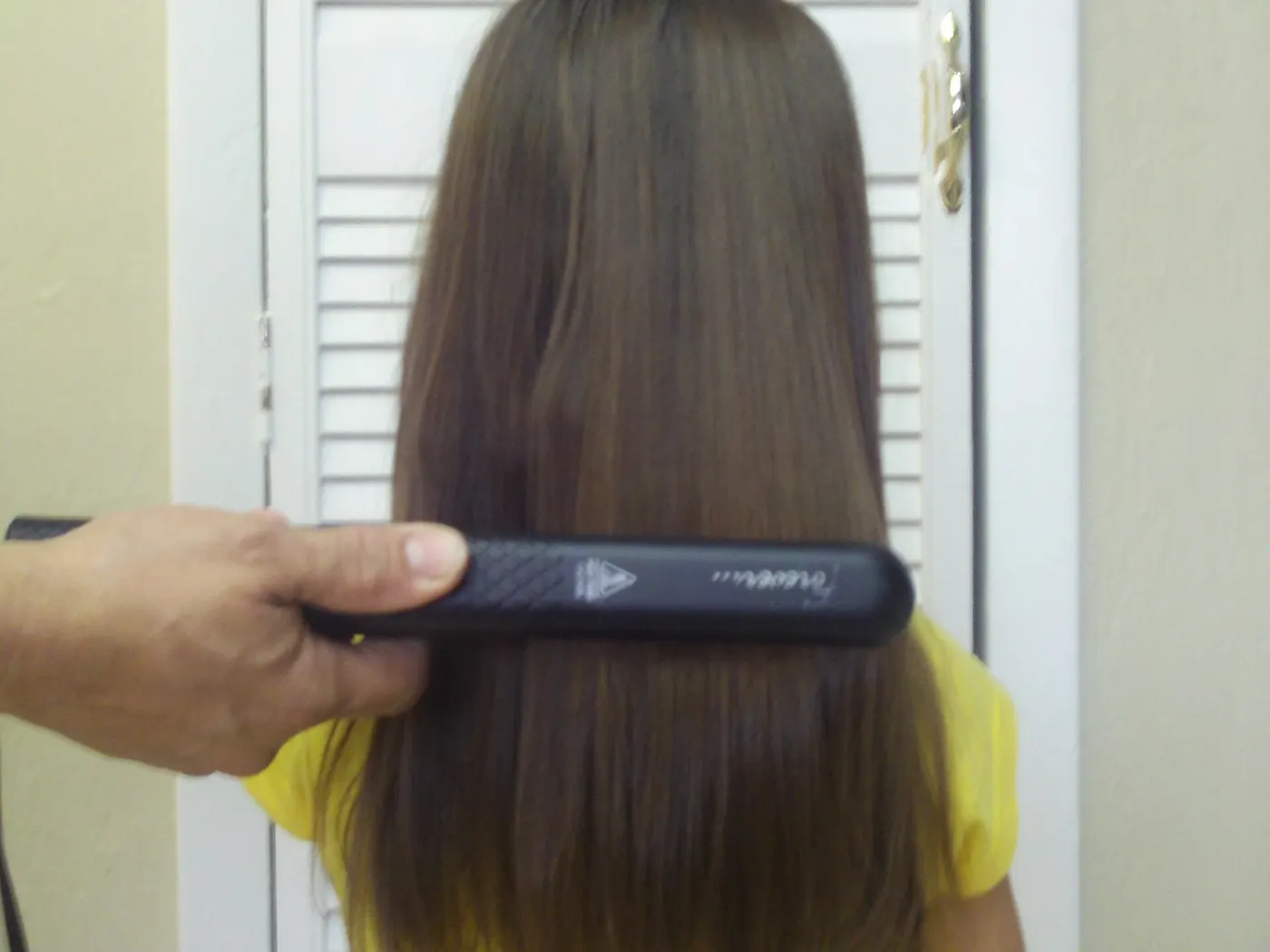
FDA states that some hair smoothing products contain formaldehyde, also known as formalin and methylene glycol, and that when the solution is heated the formaldehyde in the products is released into the air as a gas. The heat source in a salon treatment is a blow dryer and a flat iron, which means the styling tool is part of the exposure, not a bystander to it.
The reactions FDA lists are specific: watery eyes, burning sensations in the eyes, nose and throat, coughing, wheezing, nausea and skin irritation. Reports it has received also include headaches and dizziness, sore or scratchy throat, chest pain, vomiting and rash. These are airway and mucous membrane effects rather than hair effects.
FDA also notes that when formaldehyde is present in the air at levels exceeding 0.1 ppm, some individuals may experience adverse effects. That figure is the one to carry around, because it is far below the limits that govern workplaces and it describes a room rather than a bottle.
| Figure | Value | Source and basis |
|---|---|---|
| Level at which some individuals may experience adverse effects | 0.1 ppm | FDA, hair smoothing products guidance |
| OSHA action level | 0.5 ppm | 29 CFR 1910.1048, 8-hour time weighted average |
| OSHA permissible exposure limit | 0.75 ppm | 29 CFR 1910.1048, 8-hour time weighted average |
| OSHA short term exposure limit | 2 ppm | 29 CFR 1910.1048, 15-minute STEL |
The OSHA figures govern employee exposure in workplaces, including salons. The FDA figure describes the level at which effects have been reported in individuals, which is why it is the lower number.
What the label does and does not have to tell you
Cosmetic ingredient lists are declared in descending order of predominance, with one exception that matters here: ingredients present at a concentration not exceeding 1 percent may be listed in any order after the ingredients present at more than 1 percent. So the tail of an ingredient list carries no ranking information at all.
The ingredient statement must be printed in type not less than 1/16 inch in height, or 1/32 inch where the labelling surface is under 12 square inches. That is the legal floor, and on a small bottle it is the reason the list is hard to read rather than an accident of design.
Formaldehyde releasers can appear under names that do not contain the word formaldehyde, which is why the heating step is the practical signal. A product that instructs you to seal the solution in with a flat iron at high temperature is a product whose fumes belong in a ventilated room, whatever the list says.
- Read the ingredient list knowing that everything at 1 percent or less may appear in any order
- Treat any instruction to seal a solution in with heat as the exposure step
- Open a window and run an extractor before the iron goes near a treated section
- Stop and ventilate if eyes, nose or throat start burning rather than finishing the section
- Keep the exposure short: OSHA's short term limit is written over a 15-minute window for a reason

Temperature discipline is the part you control every day
Separate from any chemical question, heat alone is the daily variable, and the only way to manage it is to use a numbered setting and work downwards. Start at the lowest plate temperature that produces the result in one pass and stay there. Two passes at a lower setting and one pass at a higher setting are not the same exposure, and the single pass is usually gentler.
Sectioning is the unglamorous half of this. A section too thick for the plates forces a second and third pass over the same hair, which multiplies the heat exposure for the same styling result. Thin sections finish in one pass, which is why the same iron can damage one person's hair and not another's.
Dry hair before ironing it. Water trapped against the plates turns to steam inside the hair shaft, and that is a mechanical event rather than a chemical one. A dryer run for 8 minutes at about 4.3 cents of electricity is the cheapest damage-prevention step available.
| Decision | What it changes | How to act on it |
|---|---|---|
| Plate temperature setting | Heat delivered per pass | Use the lowest numbered setting that works in one pass |
| Section thickness | Number of passes over the same hair | Thin the sections until one pass finishes them |
| Starting moisture | Steam formation inside the shaft | Dry fully before the iron touches the hair |
| Ventilation during a treatment | Airborne concentration in the room | Open a window and run an extractor throughout |
| Session length | Cumulative exposure | Keep treatment sessions short and take breaks |
Why the plug on a hair dryer is shaped like that
The third published risk is electrical, and the United States has handled it with a rule rather than with advice. CPSC has determined that hand-supported hair dryers not equipped with integral immersion protection are a substantial product hazard, under 16 CFR 1120.3(b)(1), which references section 5 of UL 859 and section 6 of UL 1727.
The protection is the block on the cord: CPSC describes it as a block-shaped plug incorporating a type of circuit interrupter, and its purpose is to reduce the risk of electric shock if the dryer is immersed in, or otherwise contacts, water. The rule covers dryers sold for professional use as well as domestic ones.
Dryers still reach the market without it. A recall announced on 2024-07-03 covered about 39,600 hair dryers sold at about $170, recalled because they lacked an immersion protection device and therefore posed an electrocution or shock hazard if they fell into water while plugged in. Checking the cord takes 5 seconds and is the highest-value inspection in this guide.

Before you buy
- Open a window and run an extractor before heating any smoothing solution
- Stop the session and ventilate if eyes, nose or throat begin burning
- Read ingredient lists knowing that everything at 1 percent or less is in no particular order
- Dry hair fully before an iron touches it
- Thin sections until a single pass finishes them, then lower the numbered temperature setting
- Keep treatment sessions short rather than working through in one sitting
- Check your dryer's plug for the block-shaped immersion protection device
Questions readers ask
- Is a smoothing treatment unsafe if the bottle does not say formaldehyde?
- The absence of the word settles less than the method does. FDA's concern is that formaldehyde, formalin or methylene glycol in the solution is released into the air as a gas when the solution is heated, and the heating step is visible in the instructions. Treat any instruction to seal the product in with a hot iron as the point at which ventilation matters.
- What concentration in the air is a problem?
- FDA notes that some individuals may experience adverse effects when formaldehyde exceeds 0.1 ppm in the air. OSHA's workplace limits are higher: a 0.75 ppm permissible exposure limit as an 8-hour time weighted average, a 2 ppm 15-minute short term exposure limit, and a 0.5 ppm action level. The lower figure is the one that describes a bathroom.
- Why does ventilation matter more than the dose on the hair?
- Because the reported effects are airway and mucous membrane effects: watery eyes, burning in the eyes, nose and throat, coughing, wheezing, nausea and skin irritation. Those come from what is in the room's air, which is why an open window and an extractor change the exposure more than the quantity applied to the hair does.
- Does a lower iron temperature really reduce damage?
- It reduces heat delivered per pass, which is the quantity you control. The trap is compensating with extra passes: three passes at a lower setting can deliver more total heat than one pass at a higher one. Thin the section until a single pass finishes it, then find the lowest numbered setting that still works.
- How do I check my own dryer is compliant?
- Look at the plug end for a rectangular block with reset and test buttons built into the cord. CPSC requires integral immersion protection on hand-supported hair dryers under 16 CFR 1120.3(b)(1), and the 2024 recall of about 39,600 units existed precisely because dryers were reaching buyers without it.
Sources
- U.S. Food and Drug Administration — Hair smoothing products that release formaldehyde when heated: chemicals involved, reported reactions and the 0.1 ppm figure — checked 2026-11-03
- OSHA — 29 CFR 1910.1048, Formaldehyde: permissible exposure limit, short term exposure limit and action level — checked 2026-11-03
- U.S. Food and Drug Administration — Cosmetics Labeling Guide: ingredient declaration order, the 1 percent exception and minimum type size — checked 2026-11-03
- U.S. Consumer Product Safety Commission — Hand-Supported Hair Dryers business guidance on integral immersion protection — checked 2026-11-03
Some links on this site can earn us a commission. That does not change which product a guide recommends, and it adds nothing to your price. Advertising is not enabled on this site yet. When it is, ads will be labelled and kept visually separate from the guides.